
Your needs, this model
Does it fit your priorities?
Can APHL50LB pump to an outlet 16 feet above the unit?
GE lists a 16-foot maximum pump lift. Measure the vertical rise separately from the full hose path, use the included pump hose, and keep the bucket installed; a higher outlet is outside the documented plan.
Explore this need in the finder →Does the built-in pump let APHL50LB run without its bucket?
No. GE’s owner manual requires the tank to remain securely seated while the appliance operates, including in pump mode. For a bucketless setup, choose a model whose exact manual documents that configuration.
Explore this need in the finder →Will APHL50LB fit within a 24.2-inch height and 44-pound dry-weight limit?
GE lists the cabinet at 24.125 inches high and 44 pounds dry. It fits within a 24.2-inch cabinet-height cap; still allow the required 18 inches of clearance and front space to remove the tank.
Explore this need in the finder →The GE APHL50LB is a discontinued 50-pint/day portable dehumidifier with a built-in pump, Smart Dry and SmartHQ Wi-Fi. Its practical distinction is the choice of bucket, downhill hose or a pump hose for an elevated outlet—while the bucket must stay installed even in pump mode. This is an owner-reference assessment, not a current-purchase recommendation.
This assessment uses GE’s exact APHL50LB product page, its model-specific support record and the linked owner manual. GE dates manufacture from September 2022 through April 2026 and states that the model is no longer manufactured.
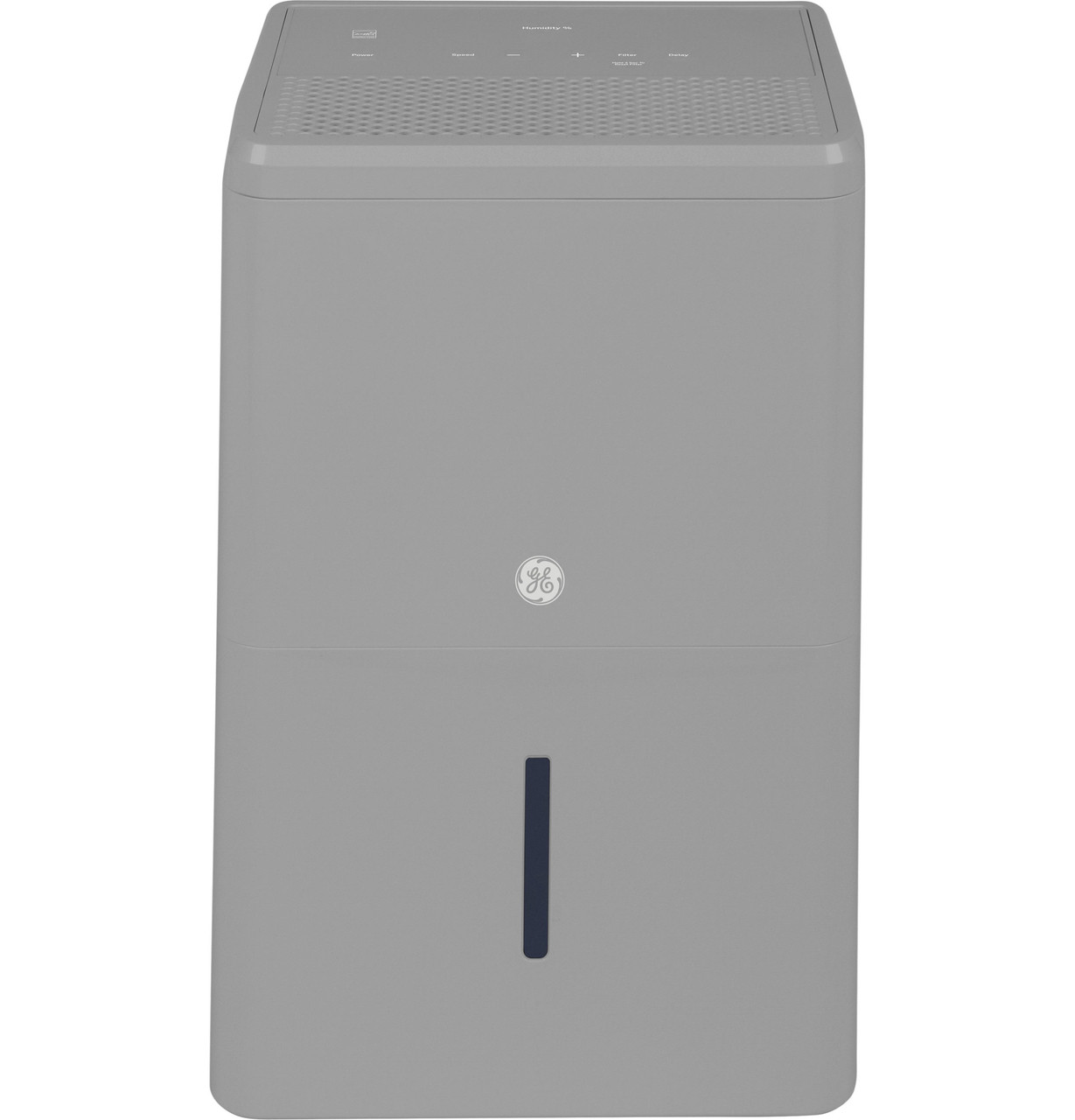
The archived GE gallery image is linked from the APHL50LB page. It shows a tall gray cabinet, top control/discharge area and a front water-level window. GE does not identify the image as a photograph or rendering; the exterior cannot reveal internal pump details.
Fifty pints is a rating, not a room guarantee
GE publishes a 50-pint-per-day removal rating and a 4,500-square-foot room-area claim. Both are useful for identifying the intended class, not a promise of daily extraction in every basement. Temperature, humidity, air leakage, connected rooms and the moisture source change what a portable appliance can accomplish. If the room has a persistent water leak or seepage, address that problem rather than treating a dehumidifier as remediation.
The 15-pint collection bucket is much smaller than the published daily rating. In bucket-only operation, a humid space can fill it well before a full day of use, so plan to empty it and reseat it correctly. A full or improperly seated tank stops the unit; the bucket-full alarm is a reminder, not overflow protection for unattended operation. The bucket also remains part of the machine when its drain is connected.
Choose the drain route before moving it downstairs
For a simple setup, leave the bucket in place and empty it by hand. The rear gravity connection can instead send water down a garden hose to a lower floor drain; GE says the garden hose is not included. Keep the hose continuously sloped and make sure the tank is fully seated. This is not a bucketless configuration.
The built-in pump is the reason to consider APHL50LB when a drain is above or away from the unit. GE’s product description says the included pump hose can route condensate up to 16 feet away, while the manual states a 16-foot maximum lift. Measure the vertical rise to the discharge point separately from the path length, and stay within the documented limit. The manual also requires the bucket to remain in place for pump operation. Do not plan on pumping with the bucket removed or treat the quoted distance as a substitute for the maximum vertical rise.
All three water arrangements are workable only if they suit the room: hand-emptying, downhill gravity, or the documented pump route with the bucket installed. If the installation needs a pump but its lift exceeds 16 feet, this exact model does not satisfy that requirement. If a bucketless machine is essential, select a different configuration whose manual explicitly allows it.
Controls, sound and connected features
APHL50LB offers three fan-speed selections plus Smart Dry. GE describes Smart Dry as adjusting the fan in response to room humidity; it is an automatic control mode, not a fourth measured capacity tier. The adjustable humidistat, 24-hour on/off timer, automatic defrost, auto restart after power loss and filter reminder cover common unattended-room routines. The permanent-mesh filter slides out for cleaning.
GE lists 530 watts, 115 volts, a 1.8 L/kWh integrated energy factor, 50 dBA at maximum and 47 dBA on low. These are published values, not independent sound or energy-bill measurements. Wi-Fi connects the model to SmartHQ for remote feedback, control and alerts, but it does not remove the need to check the tank, drain hose or room conditions. If remote monitoring is not useful, those connected features add little to the core job.
Measure the cabinet and airflow space
The gray unit is 24.125 inches high, 14.5 inches wide and 11.5 inches deep; its dry weight is 44 pounds, with casters for rolling on a suitable floor. The manual calls for at least 18 inches of air space around the cabinet and an operating room temperature from 41°F to 90°F. Include that clearance in your footprint: a narrow shelf or tight closet is not a fit simply because the cabinet itself is under two feet tall. The front-removable bucket also needs room to slide out.
Check and clean the washable filter at least every 250 operating hours, or sooner when needed. Wash and dry the bucket as the manual directs, and keep the pump line secure and free of kinks. If the room falls to 41°F or below, do not run this model there; a defrost feature does not override its operating range.
Who should keep this reference
APHL50LB makes sense to identify if you already own the exact suffix, need its manual, or are checking a specific used appliance whose pump and SmartHQ features matter. It has a substantial daily rating, a 15-pint tank and a clearly documented 16-foot lift, but it is a heavy cabinet and still needs the bucket installed for continuous drainage. GE marks it discontinued, so current support, warranty, parts and stock should be checked directly rather than assumed.
The near-sibling APHR50LB shares the 50-pint rating, 15-pint tank, three fan choices, 16-foot pump limit and cabinet measurements, but GE explicitly labels that suffix ENERGY STAR qualified. APYR50LC trades a smaller 14-pint bucket and two manual fan speeds for a different, slightly shallower cabinet and R-32 refrigerant. Those are separate model assessments, not interchangeable suffixes. For a current purchase, compare live products by the actual drain plan, exact height and required certification; do not select APHL50LB from an old sale page alone.
Key details at a glance
| Published daily removal rating | 50 pt/day |
|---|---|
| Built-in lift pump | Yes |
| Stated maximum vertical pump height | 16 ft |
| Published bucket capacity | 1.88 gal |
| Wi-Fi enabled | Yes |
| Published low-fan sound rating | 47 dBA |
| Published high-fan sound rating | 50 dBA |
| Published dimensions | 24.125 in H × 14.5 in W × 11.5 in D |
| Bucketless operating mode | No |
| Nested storage arrangement | No |
| Published product weight | 44 lb |
| Controls and settings | Digital LED display; 3 manual fan speeds and Smart Dry automatic fan adjustment; adjustable humidistat; 24-hour timer; auto restart; automatic defrost; bucket-full alarm; filter reminder; SmartHQ Wi-Fi. |
| Water-removal setup | Bucket collection, downhill garden-hose drainage, or pump drainage are documented. The garden hose for gravity drainage is not included; the pump hose is included. Pump operation requires the bucket securely seated and the stated maximum lift is 16 feet. Bucketless pump operation is not supported. |
| Care and operating limits | GE specifies a 41°F to 90°F room-temperature range, 18 inches of air clearance and filter inspection/cleaning at least every 250 operating hours. Keep the bucket seated and drain hoses properly routed. |
| Advanced filter included | No |
| Published integrated energy factor | 1.8 L/kWh |
Use the exact model’s instructions for operating limits, supplied equipment and version differences.
Sources for this assessment

Check the route before the room-size claim.
Match the rated capacity and drainage setup to a real place for the water to go.