
Your needs, this model
Does it fit your priorities?
Can the GE APEW50LZ serve a 16-foot vertical pump lift?
Yes, as an earlier reference: the directly linked 49-5000427 family manual gives a maximum 16-foot pump lift, with the bucket seated and the pump starting after that tank fills.
Explore this need in the finder →Will APEW50LZ satisfy a bucketless pump requirement?
No. The exact linked manual requires the tank seated for pump use; a bucketless pump mode is not documented.
Explore this need in the finder →Does APEW50LZ meet a 50-pint/day minimum?
GE lists 50 pints/day for this exact model. That rating class does not promise actual removal in a specific room.
Explore this need in the finder →Will the exact APEW50LZ meet an essential app-control need?
Unknown. Its exact model specifications and linked family manual do not establish Wi-Fi/app setup; generic hidden SmartHQ HTML is not suffix-specific evidence. Unknown connectivity fails an app-essential requirement.
Explore this need in the finder →The GE APEW50LZ is an earlier 50-pint/day portable dehumidifier with a 15-pint tank and a built-in pump. Its worthwhile fit question is whether this exact discontinued version suits an existing installation or a used-model comparison: the pump needs the bucket seated, and the page lists an 860-watt rating that differs from the similar APEL50LZ. It is not a bucketless pump setup or a current new-product recommendation.
I used GE’s exact APEW50LZ product page, model-specific support page, and the 49-5000427 Rev. 1 manual linked from that page. The manual cover groups APEW50 with APEL50 and APER50; the precise suffix and lifecycle come from the exact page and support record.
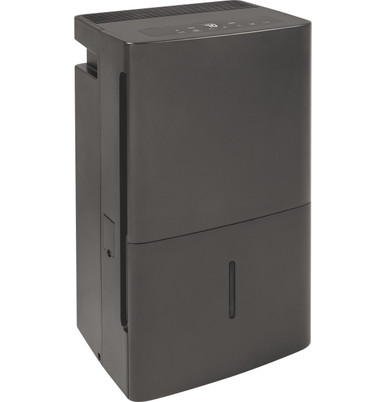
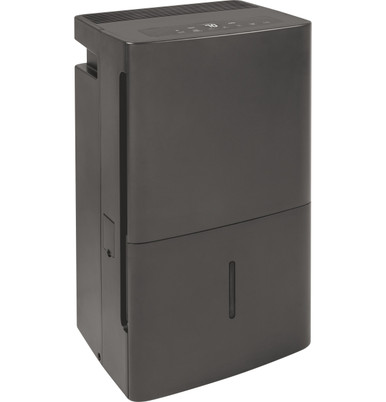
The exact page links a gray, three-quarter-view cabinet image with top controls and a front level window. It does not show the pump hose. GE does not label this image as a photograph or a rendering, and an exterior image cannot establish the condition or completeness of a used machine.
Start with the route, not the pint label
GE lists a 50-pint-per-day class, a removable 15-pint bucket and three routes for condensate. Bucket use is the simplest to understand but requires emptying. A separate garden hose can drain downhill to a lower floor outlet; that hose is not included. For a route that rises to a higher outlet, the built-in pump uses the included pump hose and the family manual sets a 16-foot maximum vertical lift. Measure the rise and the whole hose run rather than treating that maximum as a guarantee for every length or bend.
The bucket remains part of the pump plan. The manual says to keep it seated; after you hold the Pump control for three seconds, the pump waits for the bucket to fill before emptying it. That timing means water can accumulate in the tank first. Check that the hose is present, locked in place and unkinked, and make sure the destination can accept water. The gravity path also requires the bucket installed. Neither route is bucketless operation.
A 50-pint rating does not describe every room
The 50-pint figure is the manufacturer’s published capacity class, not a forecast of how much a particular basement will yield each day. Temperature, humidity, air circulation and continuing moisture all matter. Because the 15-pint tank is much smaller than that daily label, bucket-only use can involve repeated trips in a damp space; the pump reduces carrying after it cycles, not the need to keep the tank seated or monitor the discharge route.
The gray cabinet measures 24 inches high by 15 wide by 11.5 deep and weighs 43.7 pounds dry. GE lists casters, 200/165/147 CFM airflow at the three fan selections, and 47 dBA on low with 51 dBA maximum. Those are manufacturer specifications, not independent sound or performance tests. Allow room for the 18-inch clearance requested in the manual, top air discharge, front bucket removal, filter access and a safe hose path. Casters help on level flooring, not stairs.
One exact suffix has a different listed input rating
APEW50LZ’s exact product-page data lists 860 watts, 7.2 amps and 115 volts, with an integrated energy factor near 1.8 L/kWh. The similar GE APEL50LZ page lists the same 50-pint class, 15-pint tank, cabinet dimensions, weight and pump arrangement, but lists 770 watts. The official model pages do not explain the difference, so do not treat the suffixes or wattage as interchangeable. Check the exact rating label on an installed or used appliance.
GE’s exact APEW page also displays an ENERGY STAR Qualified claim, auto restart, automatic defrost, a full-bucket alarm, a filter reminder and a two- or four-hour delay-off timer. These are historical manufacturer-page specifications, not proof of current certification or of how a particular used example behaves. The current product page says the model is no longer manufactured, while support dates production from March 2020 through May 2025.
Humidity controls and connectivity are not fully settled
The exact page’s feature copy gives a 30–70% relative-humidity range, but the linked 49-5000427 family manual states 35–80% in five-point increments or continuous operation. Because those exact materials conflict, neither numeric endpoint is a safe hard matching promise; verify the physical controls on the exact unit. The manual also documents three manual fan speeds, filter care, operating-temperature limits from 41°F to 90°F and at least 18 inches of open space around the appliance.
App operation is unknown for APEW50LZ. Although generic SmartHQ material appears in the product HTML, it is hidden boilerplate rather than a model-specific specification; the exact specifications and linked manual do not establish Wi-Fi setup. Do not choose it for an app-essential need without evidence from the actual appliance or a GE suffix-specific record.
Who should keep APEW50LZ in view?
This model is most useful to identify an installed unit or assess a particular used example when its 16-foot pump limit fits the route, the bucket can stay seated and the available space can accommodate its clearance and hoses. Its 860-watt listing is a meaningful suffix-specific distinction from APEL50LZ, but the source does not explain the engineering change or claim a comparative efficiency advantage. Do not infer one from the wattage alone.
If bucket-free gravity is essential, the Midea Cube MAD50PS1QWT manual separately documents that arrangement; it is different from the Cube’s pump mode. GE’s APEL50LZ and APER50LZ reviews cover their own exact pages and support dates, not assumed substitutes for APEW50LZ. Before relying on a used APEW, match the full model label and inspect the tank, pump controls, filter, hose and drain destination. A product listing or exterior image does not establish present condition, warranty or new stock.
Key details at a glance
| Published daily removal rating | 50 pt/day |
|---|---|
| Built-in lift pump | Yes |
| Stated maximum vertical pump height | 16 ft |
| Published bucket capacity | 1.88 gal |
| ENERGY STAR certified | Yes |
| Published low-fan sound rating | 47 dBA |
| Published high-fan sound rating | 51 dBA |
| Published dimensions | GE lists 24 in H × 15 in W × 11.5 in D; the shared 49-5000427 manual asks for 18 in of clearance on all sides. |
| Bucketless operating mode | No |
| Published product weight | 43.7 lb |
| Controls and settings | The manual documents three manual fan settings, 2-/4-hour delay-off, a 250-hour filter reminder, automatic restart, automatic defrost, full-bucket shutoff and continuous mode. RH setting endpoints conflict between the exact page (30–70%) and family manual (35–80%, five-point steps or continuous); leave numeric bounds unknown. App/Wi-Fi is not established for this exact suffix. |
| Water-removal setup | Three documented plans: collect in the fitted 15-pint bucket; use a separate, unprovided garden hose downhill to a lower floor drain with the bucket seated; or use the included pump hose with up to 16 feet of vertical lift. Pump starts after holding Pump for three seconds and waits until the bucket fills. |
| Care and operating limits | Check and clean the washable mesh filter at least every 250 operating hours; the family manual also describes periodic bucket-filter and tank cleaning. Keep the tank seated. Operate indoors between 41–90°F per manual guidance and allow 18 in clearance. On a used unit, confirm the pump hose and tank are complete and functional. |
| Published integrated energy factor | 1.8 L/kWh |
Use the exact model’s instructions for operating limits, supplied equipment and version differences.
Sources for this assessment
Check the route before the room-size claim.
Match the rated capacity and drainage setup to a real place for the water to go.