
Your needs, this model
Does it fit your priorities?
Does the exact HEN30ET meet a 30-pint/day minimum?
Haier lists a 30-pint daily rating, not an assured extraction rate in every room.
Explore this need in the finder →Can HEN30ET drain continuously to a lower floor drain?
Yes, using a separate garden-hose-style hose routed downward while its fitted bucket remains inserted.
Explore this need in the finder →Will HEN30ET lift water to a drain above the appliance?
No built-in pump or upward route is documented for this exact suffix.
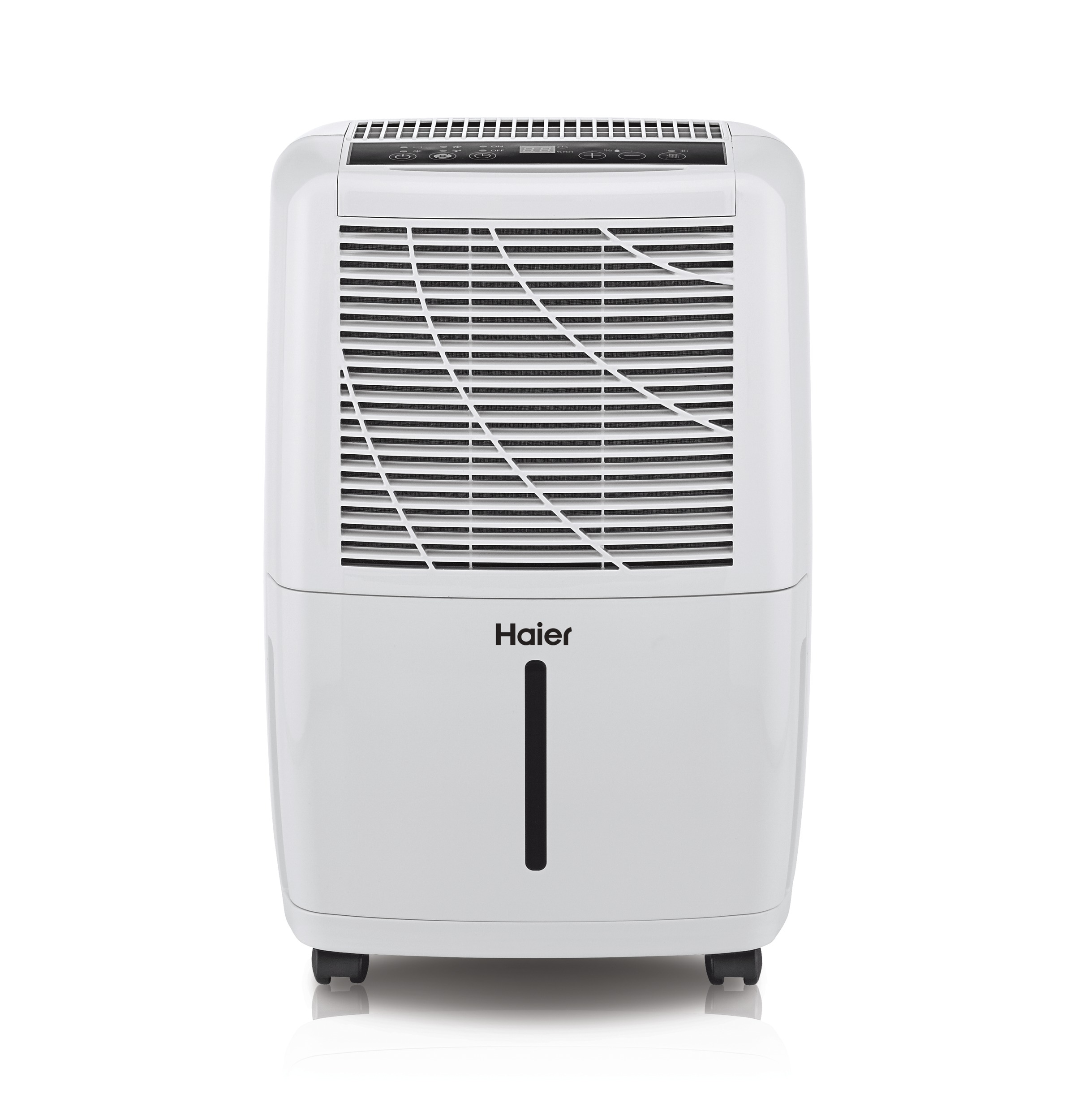
Explore this need in the finder →The Haier HEN30ET is an earlier, 30-pint-per-day portable dehumidifier with a 7-pint front bucket, two fan speeds and a gravity-drain connection. Its compact 19-inch cabinet is the smallest of the Haier group covered here, but the small tank can fill long before a day at the rated extraction level. It suits an owner identifying an existing HEN30ET or comparing a specific earlier unit—not someone who needs a currently manufactured model.
This exact-model reference uses Haier’s HEN30ET product page, its model-specific support record, the HEN30ET Installation and User Manual, and the 2020 Haier U.S. comfort-products catalog. The support record dates production March 2018–January 2020; the product page says the model is no longer manufactured.
Smallest cabinet, smallest reservoir
Haier lists 30 pints per day, a 7-pint bucket, 28.2 pounds net and a 19 × 13⅜ × 9⅝-inch cabinet. That is a narrower, shallower footprint than the 50-pint HEH50ET and much shorter than the 70-pint HEN70ETF, although all are portable compressor units on casters. Think about where the bucket slides out and how the inlet and outlet remain clear, not just whether the cabinet fits under a shelf. The manual calls for at least 8 inches of circulation space around this model and warns against running it without its filter.
The difference between a 30-pint daily rating and a 7-pint tank is practical. If the room is humid enough to let the appliance approach its rated extraction conditions, the bucket may need attention well before the day is over. Haier says the unit stops and signals when the tank fills; it resumes after the empty bucket is correctly replaced. A lower floor drain can reduce bucket trips, but it does not increase the rating or remove the need to check that the drain is flowing.
Two water routes, neither is a pump
The model-specific manual supports bucket collection and an optional direct-drain hose. For the continuous route, remove the rear drain cover and soft rubber stopper, attach a separate garden-hose-style hose, and lead it to a drain. The hose is not supplied. The installation page explicitly says the water bucket is to be inserted for operation. That is a gravity arrangement: the hose must reach a lower outlet without a rise. HEN30ET has no built-in pump listed on its exact specification page, and the manual documents no pump mode or bucketless setup.
This distinction matters more than a generic “continuous drain” label. A hose connection does not lift water above the cabinet, and a full tank still interrupts operation if the drain is kinked, blocked or routed uphill. If the only convenient outlet is a raised sink, the HEN30ET is a poor fit; compare a model whose manual lists a pump and a sufficient documented lift. If the outlet is at floor level, gravity may be simpler and quieter than paying for a pump, but the hose route must be set up carefully.
Controls and conditions worth checking
The exact Haier listing specifies two fan speeds, electronic humidity control, a full-bucket light and audible alarm, automatic shutoff, automatic defrost and a 24-hour on/off timer. It publishes airflow of 113 CFM on high and 99 CFM on low, along with 370 watts, 3.3 amps at 115 volts and R134a refrigerant. These are manufacturer specifications, not a lab test or a prediction of the water collected in a particular basement. The page identifies the model as ENERGY STAR qualified; that is a certification claim, not a promise about your bill. Haier’s general SmartHQ material appears on the product site, but the HEN30ET’s exact specification list does not establish Wi-Fi Connect. Do not treat that shared banner as proof of app control.
The manual says that below 54°F the evaporator may frost and the appliance periodically defrosts; if the room remains below 41°F, turn the unit off. It advises waiting 24 hours after the unit has been tilted so compressor oil can settle. The front filter is removable and should be cleaned with a vacuum or water; let a washed filter dry before reinstalling it. Keep water away from the controls and unplug the unit before cleaning. These are straightforward routines, but the 7-pint bucket makes an unattended, bucket-only placement less forgiving than the larger models.
When an earlier reference is useful
HEN30ET is most useful when the full model label matches an installed appliance or a specific used listing. Its modest cabinet and lower rated capacity are genuine distinctions from the 50- and 70-pint Haier siblings, not evidence that it is right for a smaller room: room area and moisture load still matter. For an earlier 50-pint body with an 11-pint bucket, compare the HEH50ET review; for a 70-pint unit with an 18-pint bucket and gravity drain, see HEN70ETF. Both are also marked no longer manufactured. The pump-equipped HEN70ETFP is a distinct suffix and has a separate recall caution; do not transfer its pump features to HEN30ET.
If you are buying new rather than identifying an older model, use the dehumidifier finder and compare models whose current status, drain arrangement and exact operating instructions are documented. Haier’s product page says HEN30ET is no longer manufactured, so a leftover or used offer does not establish unit condition, remaining warranty, parts availability or recall status. This review is not a mold-remediation claim; correct drainage and addressing the source of moisture remain separate household tasks.
Key details at a glance
| Published daily removal rating | 30 pt/day |
|---|---|
| Built-in lift pump | No |
| Published bucket capacity | 0.88 gal |
| Wi-Fi enabled | No |
| ENERGY STAR certified | Yes |
| Published dimensions | 19.0 in H × 13.375 in W × 9.625 in D |
| Bucketless operating mode | No |
| Published product weight | 28.2 lb |
| Controls and settings | Electronic local humidity control, full-bucket alarm/shutoff and automatic defrost. Smart Dry is listed only for the exact HEH50ET and HEN70ETF models; it is an automatic mode, not an extra manual speed. |
| Water-removal setup | Exact manual supports a separately purchased garden-hose-style gravity route to a lower drain; it is not an uphill pump. Bucket-seating details are recorded per exact plan and remain unknown where manual instructions do not state them. |
| Care and operating limits | Keep the removable filter installed, clean it periodically and dry it before reinstalling if washed. Manuals say turn the unit off below 41°F and describe defrost below 54°F. Observe exact clearance and post-tilt instructions. |
Use the exact model’s instructions for operating limits, supplied equipment and version differences.
Sources for this assessment
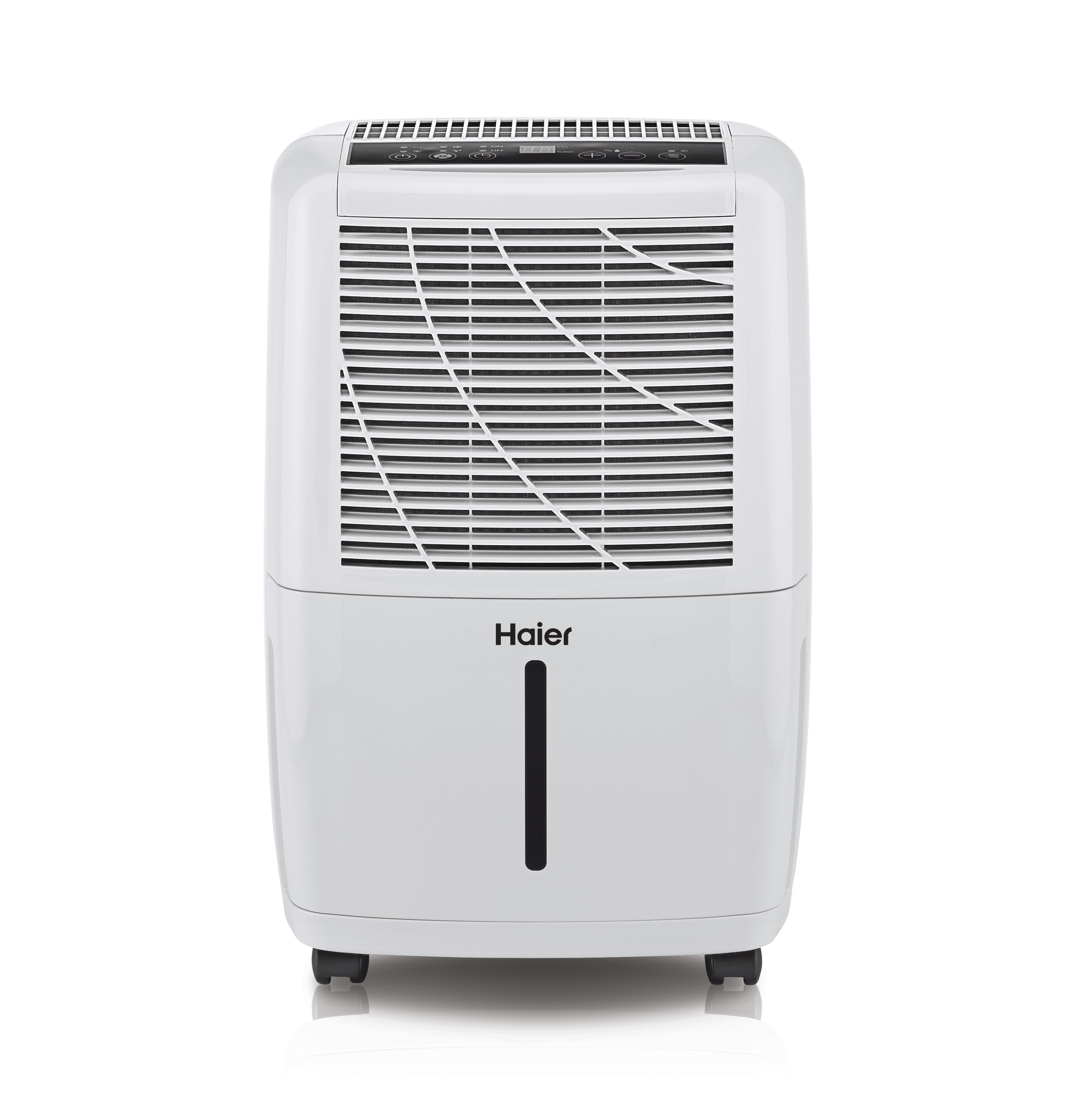
Check the route before the room-size claim.
Match the rated capacity and drainage setup to a real place for the water to go.